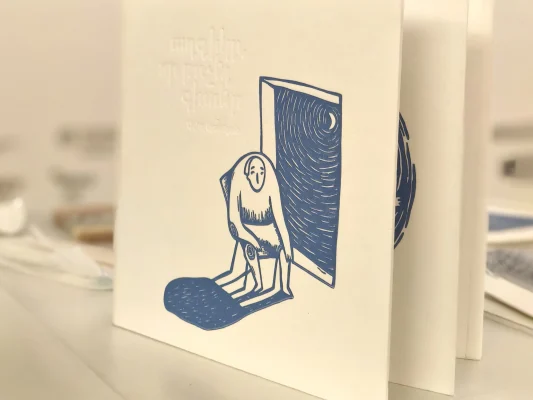
Photo by “Mkhitar Sebastatsi” Educational Complex
A creative teacher is the most essential condition for children to be in a creative environment at school and to strive to present themselves to the world with their individuality.
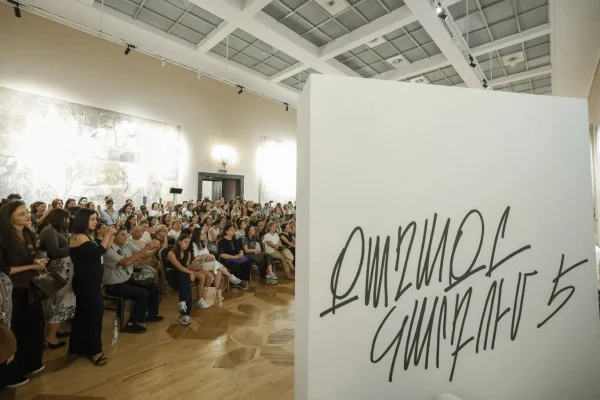
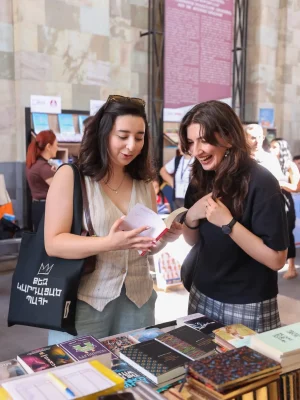
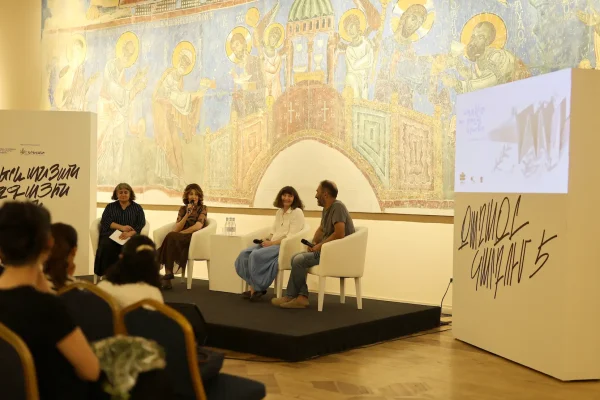
Today’s global trends are rapidly plunging into a reality increasingly dominated by automation, where the spiritual and emotional dimensions are fading. It is precisely in such a context that the creative teacher can cultivate entirely different aspirations among learners. A striking example of this was what took place last week at the “Martiros Saryan” Hall of the Artists’ Union of Armenia- an event held as part of the annual Summer “Art Festival” organized through the authorial educational program of the Art Education Center of the “Mkhitar Sebastatsi” Educational Complex, thanks to the dedicated efforts of artist-teachers.
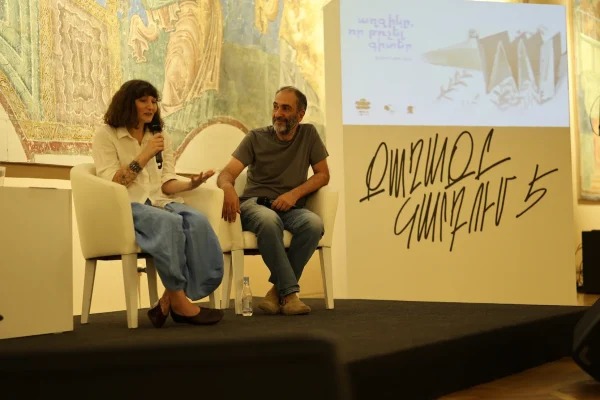
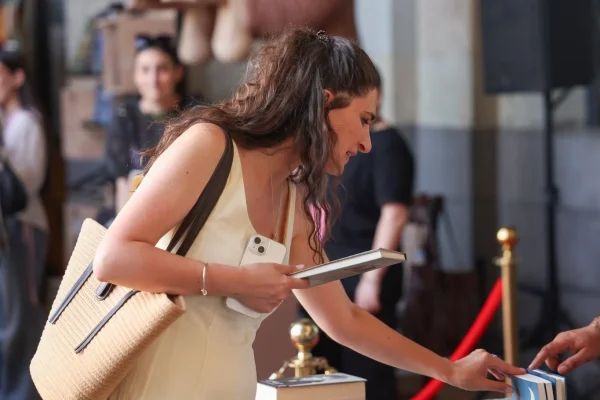
The “Borders” exhibition, organized in collaboration with colleagues from Sweden and France, was an invitation to reflection addressed to teachers, education specialists, and those interested in the fields of art and pedagogy.
Initiated by the artist-teachers of the “Mkhitar Sebastatsi” Educational Complex, the exhibition that crossed international borders featured works by authors that included the Complex’s own teachers. Some of the artists from abroad also have teaching experience, while others engage with children through art exhibitions and related activities.
The artists and teachers who participated in the exhibition are:
At the core of the “Borders” exhibition’s concept are the questions posed by its curator-artist, teacher at the “Mkhitar Sebastatsi” Educational Complex, and lecturer at the Yerevan State Academy of Fine Arts- Gagik Charchyan:
Photos by “Mkhitar Sebastatsi” Educational Complex & mediaforedu.am
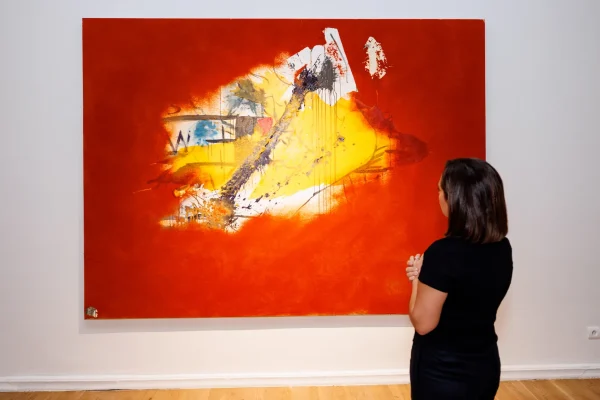
According to Gagik Charchyan, the works of the Armenian artists- as well as those from Sweden and France- and the teachers of the “Mkhitar Sebastatsi” Educational Complex traverse personal, political, and poetic spaces, offering diverse and often contradictory responses to the question of what it means to exist at the edge of a border or beyond it.
“Here, art becomes not only a means of expression but also a gesture of resistance- a proactive strategy against war, market forces, and ideological pressures. The artists reveal the border not as a barrier, but as an experience,” explains Gagik Charchyan, drawing connections between the boundaries of teaching and artistic practice.
“The border becomes a place where one can listen, see, and feel. It does not only divide-it also unites, creating possibilities for communication, imagination, and transformation.”
The artist-educator describes the result of the year-long preparation for the exhibition as “a message about the power of creativity, the importance of mutual understanding and shared imagination, where different languages, media, and stories intertwine to form new perspectives, sensations, and connections. A space where questions do not seek definitive answers, but rather invite participation through լիճ, doubt, and reinterpretation.”
“Borders” is also a philosophical invitation to reconsider the architecture of our thinking. As the teacher interprets it, the border becomes a place where the impossible takes shape through collective imagination. The artists seek to uncover the mechanisms of the barriers that exist between oppositions and to open up new perspectives.
Using various media (video art, performance, installation, photography, object art, canvas), they create visual forms that disrupt “ordinary” perception and invite the viewer to cross beyond the border.
“Only through shared cultural experience can we come to understand ourselves, our evolving identity.”
Gagik Charchyan presented a series of 31 photographs at the exhibition. The photos are arranged in sequence, but not in a straight line- they are set at varying heights, either elevated or lowered.
“Like the physical fragmentation of the act of observation itself. Like breathing, like walking- while strolling.” In the photographs, one sees the layer of asphalt and the lower edge of a fence. The artist-teacher explains the concept as follows: “A border we usually don’t see or don’t want to see. At first glance, it’s nothing. Emptiness. Repetition. But if we don’t rush, these elements devoid of narrative will speak through presence.”
It is the perspective of the artist-teacher: in an inspiring environment, objects detached from the flow of everyday life become visible again- cigarette butts, plastic caps, oil stains, dust, pervasive shadow, weeds, scratches, a manhole cover. A sequence of movements, coincidences, and observations.
“Work requires presence, not gaze.
Attention here becomes an act of resistance.
The border ceases to be a line- it becomes a place.
A surface where time leaves its sediment.”
In the context of the “Borders” exhibition, Gagik Charchyan’s work conceptualizes the border not as a dividing line, but as a threshold of experience. It does not depict the border; it invites the viewer to sense it through attention, bodily engagement, and temporal duration. This photographic series does not aim to show, but to invite presence.
“And this is precisely its political nature,” concludes Gagik Charchyan in describing his work.
Environment
In the case of the “Mkhitar Sebastatsi” Educational Complex, which hosts the annual Art Festival, it is not unusual to present work within art institutions, says Gagik Charchyan. According to the artist-teacher, this is yet another way in which the Educational Complex differs from many other schools.
Video by mediaforedu.am
P.S. The works of the other artist-teachers presented at the exhibition will be published soon.