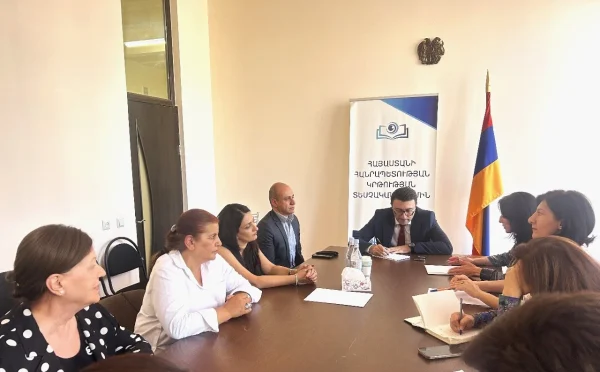
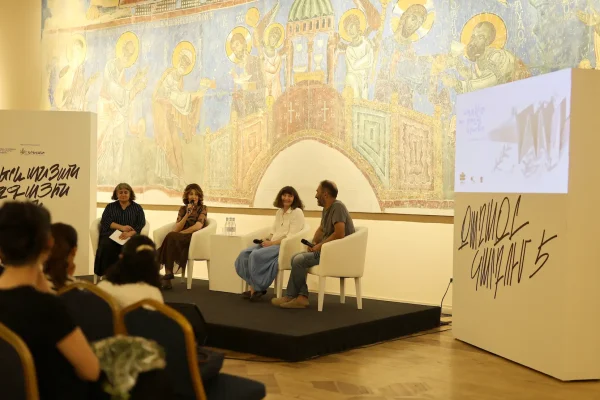
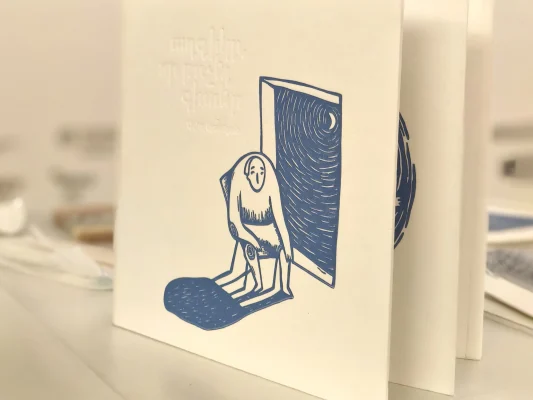
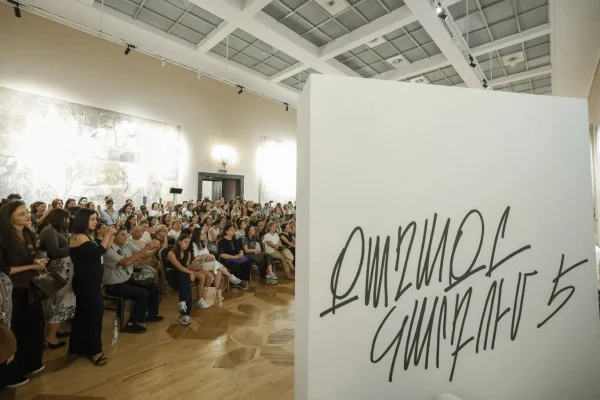
Photos by “Mkhitar Sebastatsi” Educational Complex and Heidi Edström
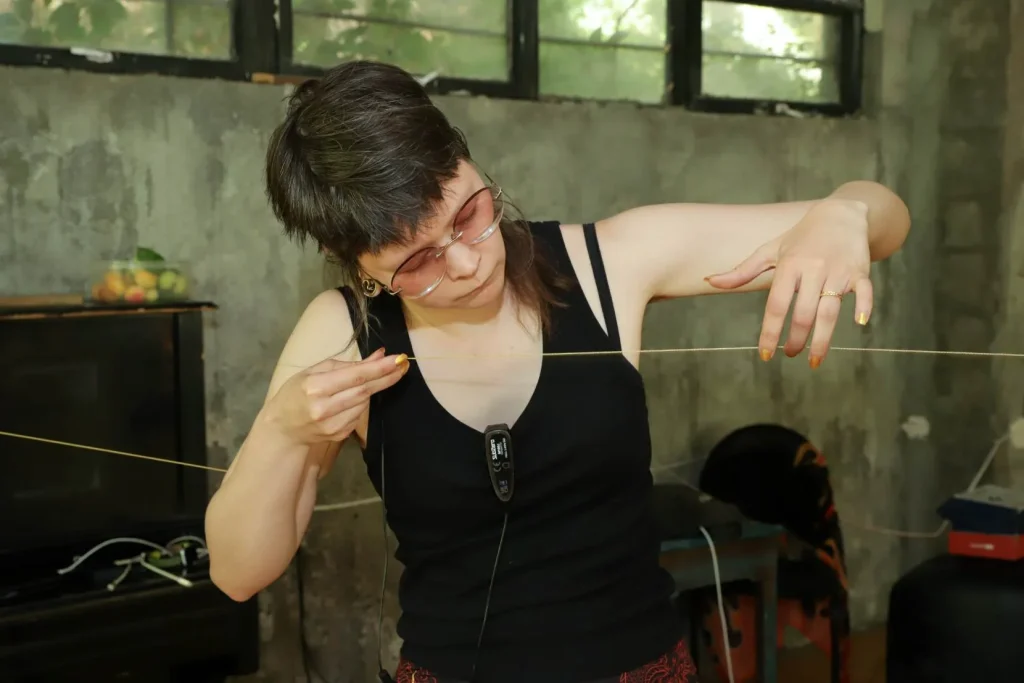
At the “Borders” exhibition, Swedish artist Heidi Edström presented the work “Wires of Power”, a unique combination of music, installation, and performance art.
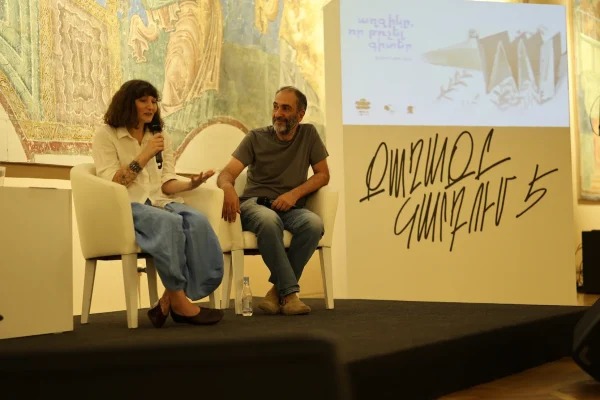
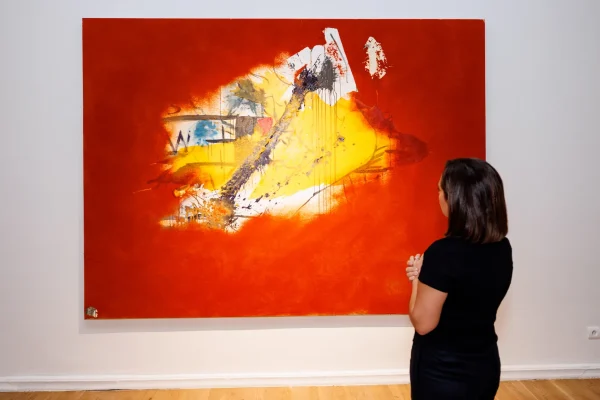
In the “Martiros Saryan Hall of the Artists” Union of Armenia, within the framework of the annual summer “Art Festival” organized through the authorial educational program of the “Mkhitar Sebastatsi” Educational Complex Art Center, an impressive display of works created by artist-teachers was arranged in such a way that on one side stood “Mother Earth” by Swedish-Armenian artist Narek Aghajanyan, and on the other, Mother by Martin Ålund.
From Unheard to Heard

Photo by Martin Ålund
The instrument created by Heidi Edström stretched across the space: wires about ten meters long, resembling sun rays, appeared silent at first glance, yet they became sensitive when approached in the right manner.
Heidi Edström’s performance reflected the idea arising from the concept developed by Gagik Charchyan: borders, whether political, cultural, or existential, are never absolute. Just as the silence of the wires turned into sound, she demonstrated that a threshold that seems rigid or mute can, in fact, open new possibilities. Listening became an act of discovery, and the border – a space of transformation.
This work was completed on the basis of the impressions the artist received in Armenia. Reflections on the millennia-old artifacts of the Areni cave, separated by threads, yet vivid evidence of life’s existence, unlocked the strength to reach new layers of knowledge. So inspiring were these encounters that the artist embarked on a mental journey through the paths of understanding and the pursuit of human knowledge.
Creativity and Education

Photo by “Mkhitar Sebastatsi” Educational Complex
In a conversation with mediaforedu.am, Edström emphasized, the importance of art in education. In her view, creativity and art are not added values but vital gifts: “It is very important to nurture creativity from an early age. It opens new possibilities for the mind, helps one to be innovative, to communicate, and to think not only in functional but also in abstract ways”, she said.
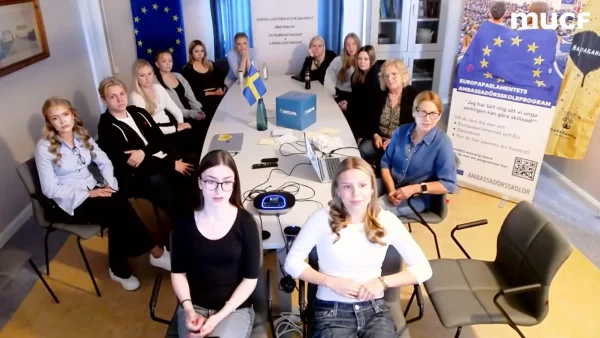
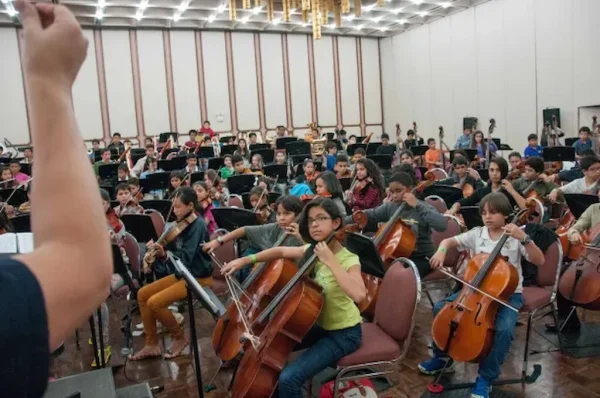
In Armenia, Heidi Edström created works together with adolescents and specifically for them, combining visual art, music, dance, and theater. According to her, working with schoolchildren is unique, as they already live with the conviction that “everything is possible”.
Her experience in Armenia left a strong impression on her: “Here, people were very willing to listen and to open themselves to the new. Such curiosity is of great importance, as it allows one to overcome the borders of the ordinary”, – the artist concluded in her reflections.

Photo by “Mkhitar Sebastatsi” Educational Complex
According to Edström, the significance of art lies precisely in its “non-practical” nature: it provides the opportunity to explore what may seem useless, yet where new pathways often emerge. In her view, this approach cultivates flexibility of thought, fosters empathy, and creates connections between people through emotions.
In today’s unstable world, where borders are constantly being redrawn, Edström regarded poetic thinking as indispensable: “It helps to preserve the capacity to feel, to empathize, and to imagine alternative ways of living,”- she concluded.
Edström’s presence at the “Borders” exhibition was a further reminder that art is not a luxury. It is a means of making the unheard heard, of keeping imagination alive, and of transforming education- addressing not only its practical aspects but also its deeply human dimensions.
P.S. The works of the other artist-teachers presented at the exhibition will be published soon.