Photo by Varduhi Petrosyan
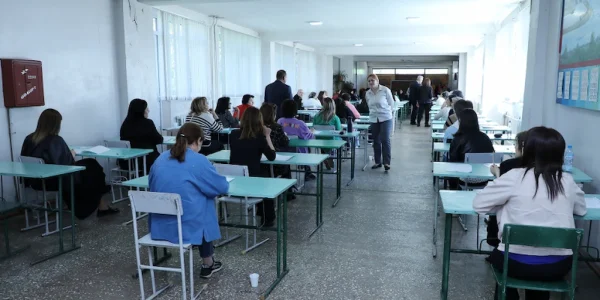
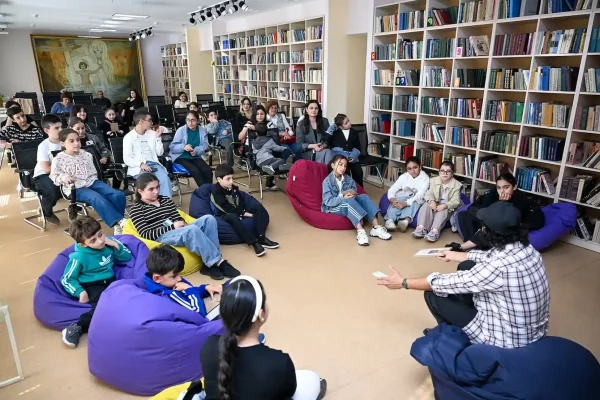
On October 6, the “Media for Education” NGO presented to the Education Inspectorate of Armenia the results of its study on the essays written by 9th-grade students. Issues concerning the preparation phase, the conduct of the exams, and the assessment of essays as final examinations were discussed.
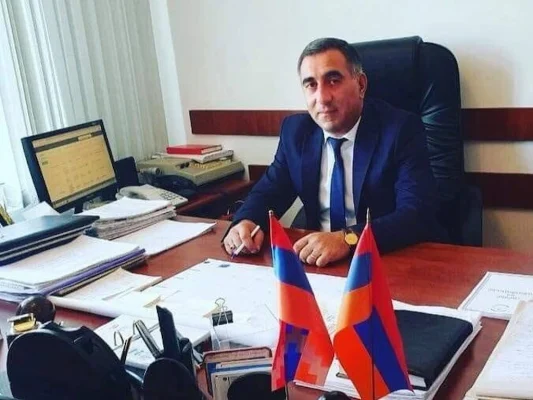
The meeting was attended by the Head of the Education Inspectorate of Armenia- Vagharshak Matikyan, Deputy Heads Raisa Galstyan and Arsen Baghdasaryan, Assistant Anush Ayvazyan, Head of the General Education Department Suren Avetisyan; Head of the Risk Assessment Department Zaruhie Mikaelyan; and Head of Public Relations Varduhi Petrosyan.
Anush Martirosyan, President of the “Media for Education” NGO, noted that after reviewing the content of 95 essays, examining the timing of the adoption of the legal acts regulating the exam, and analyzing the issues identified in the written works known to the NGO, it became evident that stricter supervision is required.
Nelli Hayrapetyan, co-founder of the “Media for Education” NGO and a teacher, emphasized that the average score of the 95 essays she reviewed did not exceed 11 points, while approximately 30 percent of the works received the minimum score. According to her, this indicates that even students in Tavush are still not ready to take the essay as a final examination.
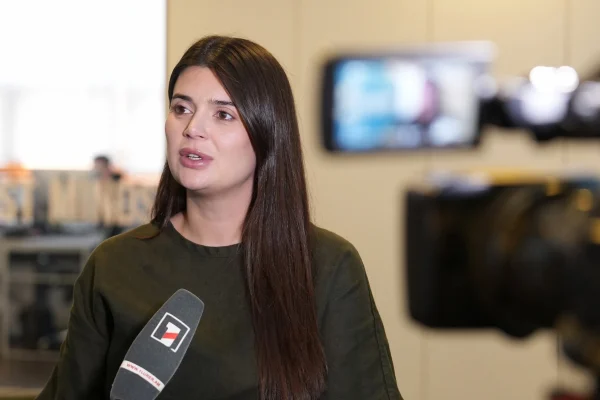
The teacher presented her professional conclusions regarding the content of the essays and highlighted that the content of education and the curricula play a key role in this matter. Nelli Hayrapetyan noted that under the current State Standard of General Education, teaching students to write essays and assessing them already require extraordinary effort, while the existing variety of problems and gaps only aggravate the situation.
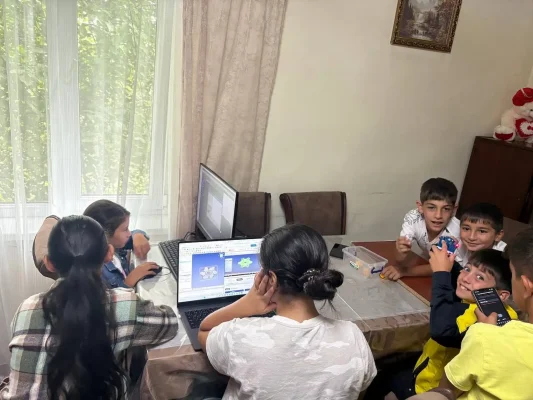
Susanna Davtyan, co-founder of the “Media for Education” NGO and a special education teacher, emphasized that if we want to understand why creative thinking is absent in the essays, we must first examine how children’s education has been organized in previous years and identify the main underlying problems.
During the discussion, Anush Martirosyan also highlighted the issue related to the grading scale. She noted that the study of 95 essays written in June 2025 revealed that some teachers had applied double scores, while others had not. This situation indicates that the implementation of a unified grading standard has been problematic. Although the assessment rubric is defined on a 10-point scale, according to the Ministry of Education, Science, Culture and Sports of Armenia, the evaluation was calculated on a 20-point scale. However, as the analysis of the essays and conversations with teachers from Tavush reveal, not all teachers were properly informed about how and on what scale they were expected to assess the works. According to Anush Martirosyan, this clearly indicates that teachers were not provided with the necessary instructions on time and in a proper manner. In addition, representatives of the “Media for Education” NGO reported that some teachers assigned a single overall score (covering both literature and history), while others evaluated separately, for example, assessing knowledge of literature or history individually. There were even cases where only one subject’s score was recorded, despite the fact that the task was an integrated essay.
Ani Azatyan, a high school teacher of Armenian language and literature who also reviewed the essays at the request of the “Media for Education” NGO, stated that under the current conditions, it is impossible to assess the intersecting concepts. She explained that if the task involves such intersecting concepts, analytical thinking should be reflected within a combined and content-based context of both history and literature. She also observed that the students had mostly copied from the provided texts instead of expressing their own thoughts based on them.
The Head of the Education Inspectorate, Vagharshak Matikyan, inquired how teaching essay writing affects the teacher’s work.
Nelli Hayrapetyan responded that teaching essay writing could be a pleasant and meaningful task if free thinking were nurtured from the very first grade, gradually reaching the stage when the student is ready to learn how to write an essay and, only after some time, to take it as an exam. Otherwise, according to the “Media for Education” co-founder and teacher, it is pointless to speak about essays, intersecting concepts, critical thinking, or creative students.
The teachers who met with the Head of the Inspectorate suggested first verifying whether the teachers conducting the exam are themselves capable of writing an essay, and only then considering the idea of holding essay exams for students across all regions.
Vagharshak Matikyan emphasized the importance of clarifying the underlying causes of the raised issues. He suggested mapping the problems to better understand what approach should be taken for effective oversight. The Head of the Education Inspectorate of Armenia stated that the issues brought up during the meeting would receive due attention.

Vagharshak Matikyan emphasized the importance of civil society engagement.
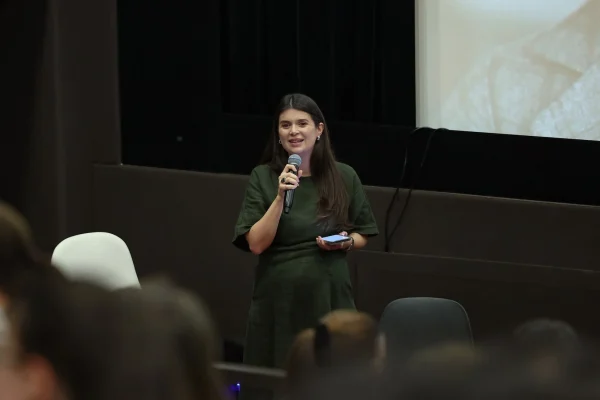
It was agreed to continue the discussions.